
Pillar: Understanding the Science
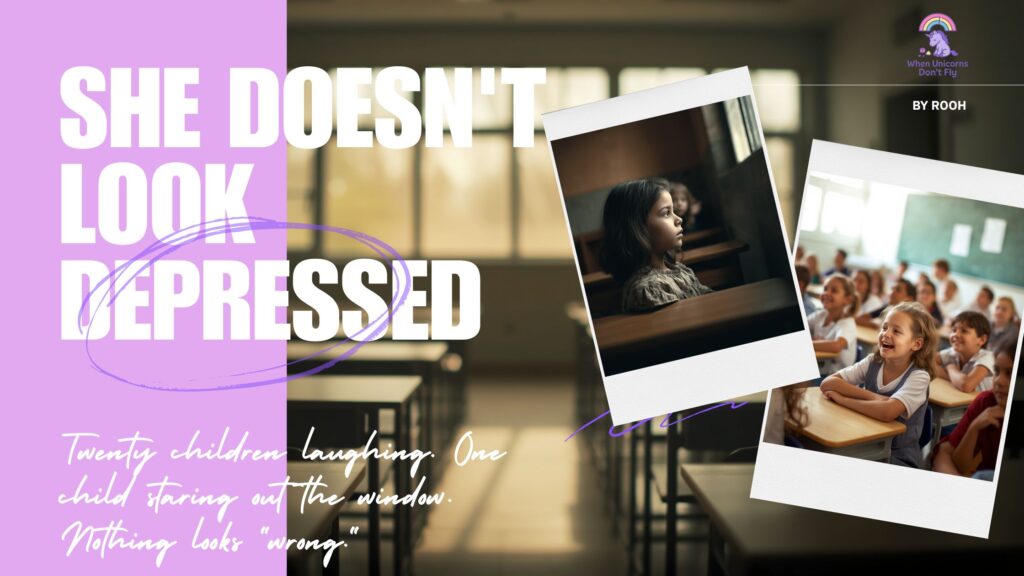
A child comes home from school, throws their bag on the floor, and snaps at everyone who talks to them for the rest of the night. A parent sighs and thinks: teenage attitude. Another child starts complaining of stomachaches every morning before school — the pediatrician runs tests, finds nothing, and sends them home. A third child becomes the “easy” one: quiet, high-achieving, never any trouble at all.
None of these children look like the picture most of us carry in our heads when we hear the word depression — a kid crying in bed, unable to get up. And that’s exactly the problem. Childhood depression rarely announces itself as sadness. It shows up as irritability, as a stomachache, as suspicious quietness. It hides in plain sight, and that’s precisely why so many children go years without anyone realizing what they’re carrying.
What It Actually Is
Depression in children is a real, diagnosable mood disorder — not a phase, not a character flaw, and not something a child can simply be told to “snap out of.” Clinically, it means a persistent low mood, irritability, or loss of interest that lasts most of the day, more days than not, for at least two weeks, and that’s out of step with who that child normally is.
That word — persistent — matters. Every child has bad days, sulky moods, or a rough week. Depression is different because it doesn’t lift. It becomes the emotional weather a child lives in.
What It’s Commonly Mistaken For
This is where things go wrong for a lot of families. Because childhood depression so often wears a different mask than adult depression, it gets mistaken for:
- “Attitude” or defiance — when irritability, snapping, or oppositional behavior is actually the child’s version of a depressed mood. Clinicians increasingly recognize that in children and adolescents, an irritable mood often stands in for the sadness adults typically describe.
- A physical illness with no clear cause — recurring headaches, stomachaches, and fatigue are among the most common ways depression shows up in younger children, especially those who don’t yet have the vocabulary to say “I feel hopeless.”
- Laziness or lack of motivation — when it’s actually low energy, poor concentration, and loss of interest in activities the child used to enjoy.
- Being “the easy one” — a child who goes quiet, complies, and causes no trouble can be just as depressed as a child who is visibly struggling. Compliance is not the same as being okay.
This matters for parents and readers because a child who is misread as difficult, dramatic, or “fine, just quiet” is a child who doesn’t get help — sometimes for years. Recognizing the disguise is the first step to actually seeing the child underneath it.
What the Research Actually Shows
This isn’t a fringe concern. Recent U.S. data paints a sobering picture of how common — and how commonly missed — childhood and adolescent depression really is:
- Federal survey data show that nearly 1 in 5 (18%) youth ages 12 to 17 have had at least one major depressive episode in the past year — roughly 4.5 million adolescents.
- The CDC’s own Youth Risk Behavior Survey found that the share of high schoolers reporting persistent sadness or hopelessness rose from 30% in 2013 to 40% in 2023, even after a slight improvement from its 2021 peak.
- Broader physical-health survey data put past-two-week depression prevalence at 13.1% among people age 12 and older, with rates higher in females than males — and nearly 88% of those with depression reporting real difficulty functioning at work, home, or school because of it.
- Clinical guidance from child psychiatry sources is consistent on the disguise problem: younger children with depression often don’t express sadness the way adults do, and instead show increased irritability, clinginess, frequent crying, poor concentration, or unexplained headaches and stomachaches.
- The American Academy of Child & Adolescent Psychiatry notes plainly that children with depression may appear sad, tearful, or irritable, and often have more physical complaints like frequent headaches or stomachaches than depressed adults do.
Put together, the research says two things clearly: this is common, and it very often doesn’t look like what we expect.
Signs Worth Watching For
None of the below is a diagnosis — only a licensed clinician can make one. But these are patterns worth paying attention to, especially when they last more than two weeks and represent a real change from who your child usually is:
- A shift in baseline, not just a bad mood. The clearest signal isn’t sadness — it’s change. A social kid going quiet. A calm kid becoming easily angered. A high-achiever suddenly indifferent to things they used to care about.
- Physical complaints with no medical explanation. Recurring stomachaches, headaches, or fatigue that a doctor can’t otherwise account for are one of the most common ways depression shows up in children, especially younger ones.
- Withdrawal dressed up as independence. A child who stops wanting to see friends, skips activities they used to love, or spends far more time alone than usual — even if they insist everything’s fine.
A Gentle Next Step
If any of this sounds familiar, the next step isn’t to diagnose your child yourself — it’s to get curious, out loud, gently, and more than once. Ask what’s been going on lately, not just “are you okay” (which is easy to wave off). Consider a conversation with your pediatrician or your child’s school counselor as a low-pressure first stop; they can help you figure out whether a referral to a child psychologist or psychiatrist makes sense.
Above all, try to hold this thought loosely but firmly: a child who looks “fine” — quiet, high-achieving, no trouble at all — is not automatically fine. Sometimes that’s exactly what depression looks like when it’s hiding well.
If your child (or you, as a child) ever showed some of these signs and no one noticed, you’re not alone — that’s the story at the heart of “When Unicorns Don’t Fly.” If you or someone you know is struggling, please reach out to a mental health professional or a crisis line in your area.
Sources
- Annie E. Casey Foundation, Youth Mental Health Statistics in 2024 — aecf.org
- JED Foundation, summarizing CDC Youth Risk Behavior Survey Data Summary & Trends Report 2013–2023 — jedfoundation.org
- CDC/NCHS Data Brief No. 527, April 2025 — cdc.gov
- Psychiatry Redefined, Depression in Children and Adolescents vs Adults — psychiatryredefined.org
- American Academy of Child & Adolescent Psychiatry, The Depressed Child (Facts for Families No. 4) — aacap.org
